

Common practices to reduce the risk of watercourse management
Due to the increasing frequency of extreme weather events, especially in the actual climate change scenario, accurate and effective planning of torrent control works has become an essential tool to prevent geo-hydrological risk. This type of risk knows no administrative boundaries so the adoption of common strategies to improve watershed management and protect infrastructure, assets and lives becomes essential in vulnerable territories such as Italy and Slovenia. Moreover, modern intervention planning requires working at the basin scale even in cross-boundary contexts. Therefore, cooperation between public authorities, sectoral agencies, and research organisations is the only way to share different perspectives and knowledge enabling the development of joint solutions based on a broader vision of common challenges. The TORRENT project aims precisely at establishing shared and transnational guidelines to monitor the status and functionality of torrent control works and evaluate the long-term effectiveness of structures, prioritizing the maintenance intervention and improving the watershed management strategies.
Policy objective: PO 2 – A greener, low-carbon transitioning towards a net zero carbon economy and resilient Europe by promoting clean and fair energy transition, green and blue investment, the circular economy, climate change mitigation and adaptation and risk prevention and management
Specific objective: SO 4 – Promoting climate change adaptation and disaster risk prevention, resilience, taking into account eco-system based approaches
Typology: Standard project
Duration of the project: 18. 04. 2024 – 17. 06. 2026 (26 months)
Budget: 717.094,89 eur
ERDF Budget: 573.675,90 eur
Lead Partner: Università degli studi di Udine
Project Partners:
- Regione autonoma Friuli Venezia Giulia – Direzione centrale risorse agroalimentari, forestali ed ittiche – Servizio sistemazioni idraulico-forestali irrigazione e bonifica
- Regionalni razvojni center Koper
- Univerza v Ljubljani
Associated Partners:
- Regione Autonoma Friuli Venezia Giulia – Protezione civile della Regione
- Ministrstvo za naravne vire in prostor Direkcija RS za vode Urad za upravljanje z vodami Sektor območja jadranskih rek z morjem
- Comunità di Montagna della Carnia
Project objectives:
- Establish shared and transnational guidelines to monitor the status and functionality of torrent control works.
- Evaluate the long-term effectiveness of structures.
- Prioritizing the maintenance intervention and improving the watershed management strategies.
Project outputs:
The TORRENT project brought together the knowledge and experience of Slovenian and Italian partners and developed common procedures and tools for monitoring torrents and torrent control structures. The results support the assessment of the effectiveness of existing structures, the identification of priority maintenance measures and more coordinated river basin management. They enable managers to make decisions based on historical data, field surveys and modern spatial analyses.
Pilot catchments and field surveys
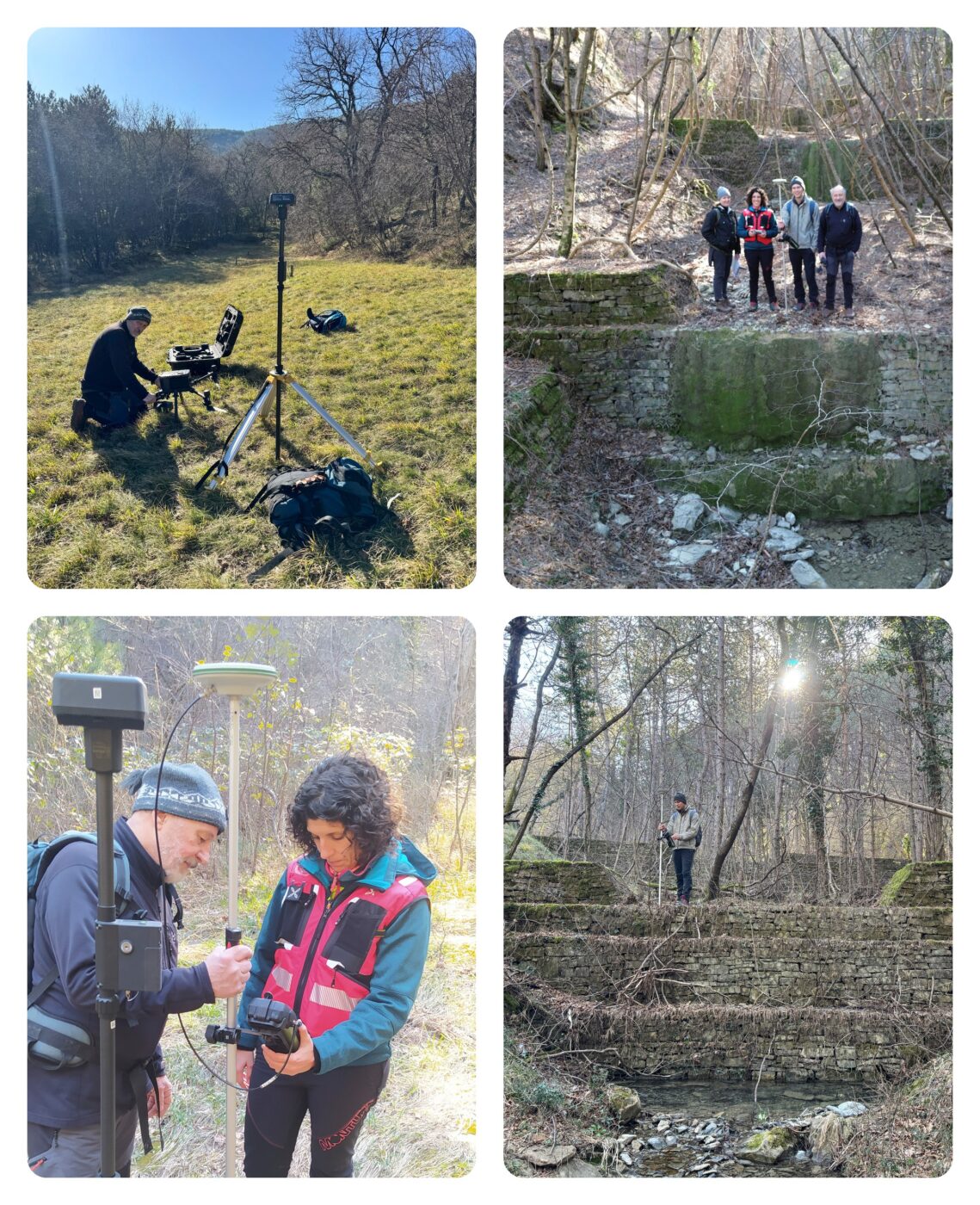
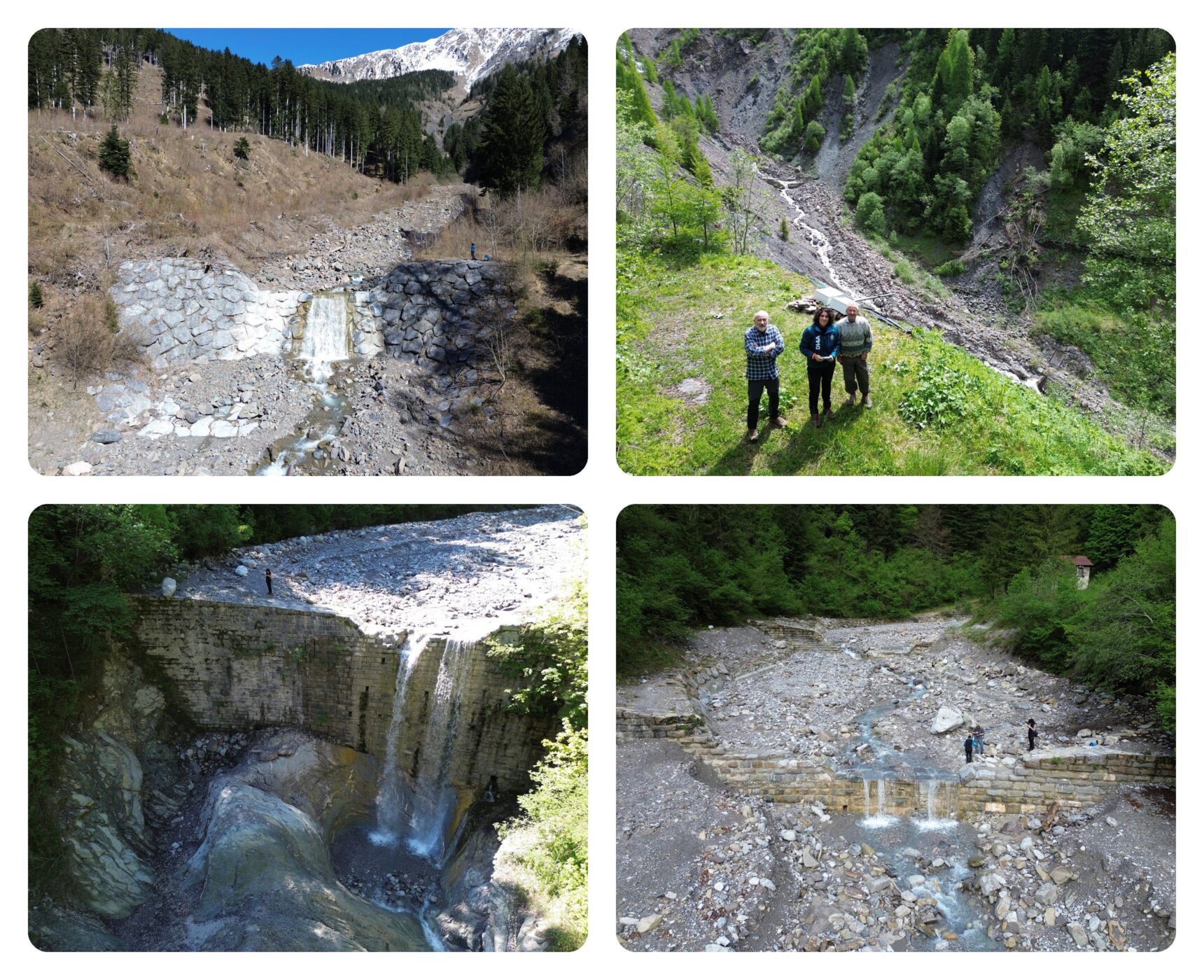
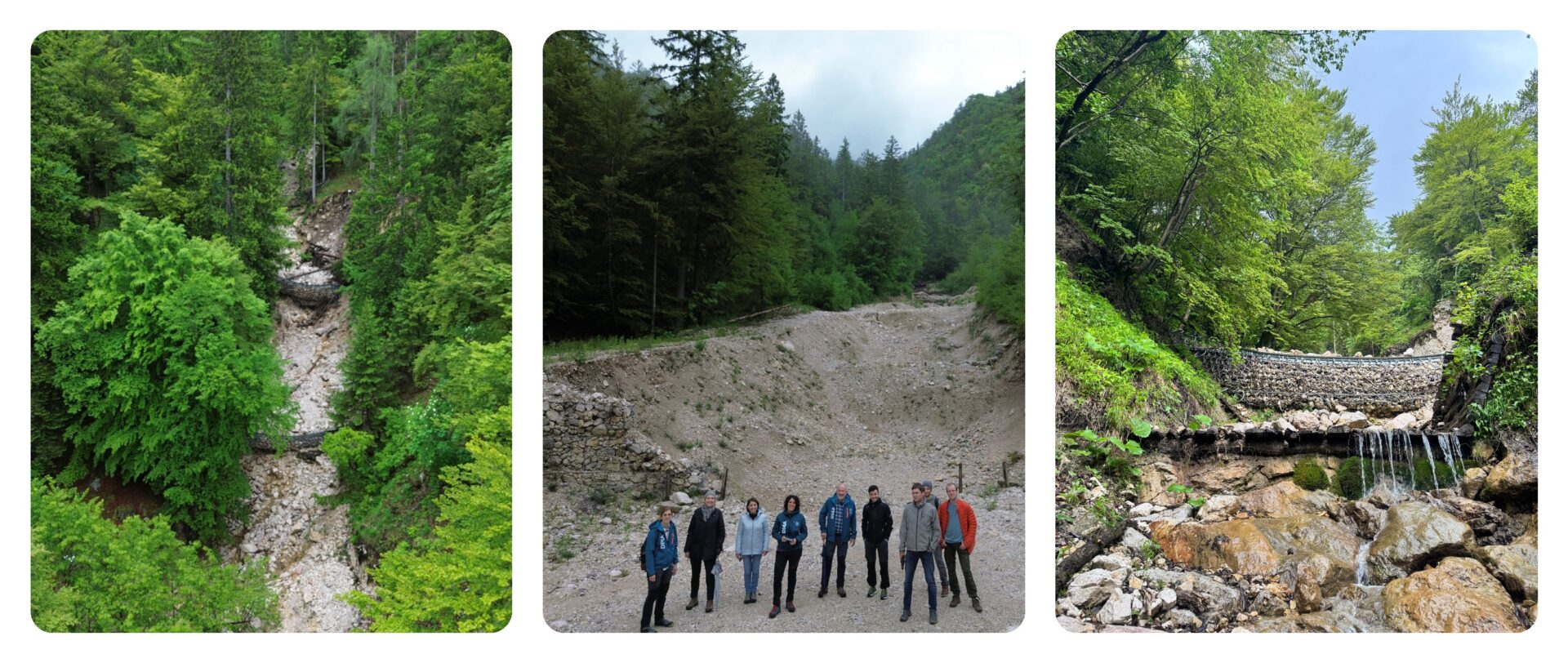
The common methodology was tested in the pilot areas of the Moscardo and Orteglas torrents in Italy, as well as the watercourse near Krvavec and the Osapska River in Slovenia. The partners collected historical and current data, inspected the condition of torrent control structures and carried out topographic surveys. Comparing digital terrain models from different periods enabled the analysis of erosion, sediment deposition and changes in stream channels.
The report on the pilot areas presents their natural characteristics and the main geo-hydrological processes. It provides a starting point for understanding the differences between catchments and adapting measures to their specific characteristics.
Download the document: WP2_A2.2_D.2.2.1._ITA_ENG_SLO
Common guidelines for improved planning and maintenance
Based on experience gained in the pilot areas, the partners prepared common guidelines on good and poor practices. The document addresses data collection, processing and exchange and highlights issues that may affect the quality of analyses and the planning of measures.
The guidelines promote the use of comparable data and coordinated workflows. Together with the assessment of the condition and functionality of structures and the use of the Maintenance Priority Index (MPi), they provide a technical basis for determining the order of priority of maintenance interventions.
Download the document: WP2_A2.4_D2.4.4_ITA_ENG_SLO
Transfer of results to other catchments
The report on opportunities for scaling up brings together the project’s key results: the shared database, digital terrain models from different periods, the Maintenance Priority Index and the operational tools developed.
The document presents opportunities to apply these results in other Slovenian and Italian catchments and at broader spatial scales. It thus provides a basis for the continued use of the project’s solutions in monitoring watercourses, assessing the effectiveness of structures and planning maintenance, including after the project has ended.
Download the document: WP3_A3.2_D3.2.1_ITA_ENG_SLO
Tool for QGIS
The HydroGeomorphology Tools for QGIS plugin was developed as part of the project for professionals involved in hydrological planning and river basin management. The tool supports the application of the developed methodology within the QGIS environment and the processing of spatial data to analyse processes in catchments.
The plugin enables research results to be transferred into the practical work of managers and planners and supports the repetition and updating of analyses with new data.
[4] Access the HydroGeomorphology Tools for QGIS tool: https://gitlab.com/hydrolab_uniud/hydrogeomorphology-tools-for-qgis-homepage
Knowledge exchange and final conference
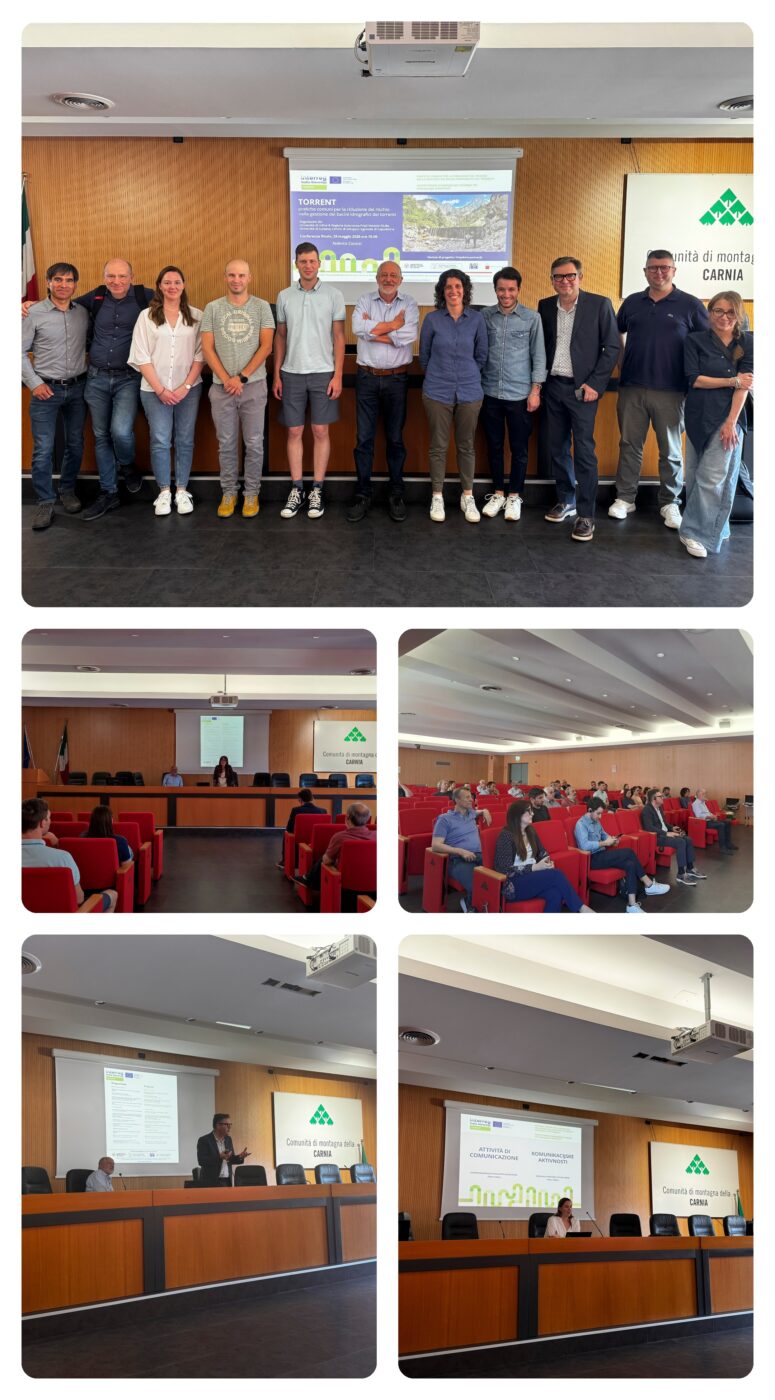
The project results were presented at the final conference on 28 May 2026 in Tolmezzo. The event brought together representatives of research organisations, public administrations and other institutions working in watercourse management and natural risk reduction.
The partners presented the procedures and tools developed, experience gained in the pilot areas and the importance of communication for disseminating and using the results. The conference enabled a technical discussion on the continued use of the solutions and opportunities for future cross-border cooperation.
Download the presentation by the University of Udine: Conference_Tolmezzo_UniUD_presentation_ITA
Conference_Tolmezzo_UniUD_presentation_SLO
Download the presentation by the Regional Development Centre Koper: Conference_Tolmezzo_RRCKoper_presentation_ITA_SLO
Interreg ITA-SLO webpage: https://www.ita-slo.eu/sl
TORRENT webpage: https://www.ita-slo.eu/sl/torrent
Contact info:
Mojca Fabbro
Phone: 05 66 37 585
E-mail: mojca.fabbro@rrc-kp.si